
“Your past creates patterns that affect your life today.”
— Vienna Pharaon, The Origins of You
Many of the patterns we struggle with in adulthood did not begin in adulthood.
The way we avoid conflict, collapse under criticism, chase unavailable people, over-function in relationships, isolate when we are overwhelmed, or feel responsible for everyone else’s emotions often has roots in much earlier experiences.
These patterns were not originally flaws, they were adaptations. At some point, they helped us preserve connection, avoid pain, manage fear, earn approval, or maintain some sense of safety inside an environment we did not have the power to change. But what once helped us survive can eventually begin to limit us.
When childhood wounds remain unconscious, we often find ourselves repeating familiar emotional dynamics without understanding why. We may choose relationships that recreate old injuries, respond to present-day situations with old protective strategies, or feel trapped in behaviors that no longer reflect who we are becoming.
This is why healing childhood trauma is not simply about revisiting the past. It is about understanding how the past is still organizing the present.
How the Past Shapes Present-Day Patterns
When childhood trauma remains unhealed, two things often happen.
First, we may unconsciously find ourselves in situations that mirror the emotional conditions of our early wounds. This is not because we want to suffer. It is often an unconscious attempt to bring resolution to something that was never fully understood, felt, protected, or repaired.
Second, we may continue repeating behaviors that originally formed as protective responses to pain.
A child who learned that needing too much was unsafe may become an adult who never asks for help. A child who had to manage a parent’s emotions may become an adult who feels responsible for everyone else. A child who experienced inconsistent care may become an adult who feels anxious, hypervigilant, or unable to relax in love.
These patterns can feel deeply embedded, as if they are simply part of who we are. But many of them are not our true nature. They are protective strategies that became part of our personality.
Protective Behaviors That Become Limiting Patterns
Hyper-independence, not asking for help, not showing any weakness or vulnerability
Isolating, retreating, shutting down, avoidance
Hyper-vigilance, always prepared, anticipating crisis (and often finding it)
People pleasing, putting others first, choosing relationships where you feel insignificant or invisible
Being the “savior” or “fixer” in relationship, pairing up with partners who need saving or excessive help
Constant feelings of fear, shame, & low self-esteem
Staying busy, over scheduling oneself, steady state of overwhelm or stress
Self-blame, hyper-critical of self, self-harm
Substance abuse, or engaging in risky behaviors
Heavy dependence on others to feel okay, secure, safe, or functional
“But I Don’t Have Childhood Trauma”
Many people hear the word trauma and immediately think, ‘But I had a good childhood.’
They remember loving parents, good intentions, stability, vacations, birthdays, affection, and the ways their caregivers genuinely did the best they could. Naming childhood wounds can feel disloyal, dramatic, ungrateful, or like an accusation against the people who raised them. But two things can be true at the same time.
You can have had loving parents, a mostly good childhood, and real moments of care, while also having experiences where your emotional needs were not fully met. Childhood trauma is not always one catastrophic event. Sometimes it is the repeated absence of attunement, repair, emotional safety, consistency, protection, or permission to be fully yourself.
A child does not need perfect parents. But a child does need enough emotional safety to feel seen, soothed, protected, guided, and accepted. When those needs are not met consistently enough, the child adapts.
Those adaptations may have helped you preserve connection in your family system. They may have helped you stay close, stay approved of, stay useful, stay quiet, stay impressive, stay invisible, or stay emotionally safe. But in adulthood, those same adaptations often become the stuck patterns we are trying to heal.
This is why looking honestly at childhood is not about blaming your parents. It is about understanding the emotional conditions that shaped you, so you can begin to make new choices now.
Childhood Trauma Is Not Always Obvious
Childhood trauma is not always a catastrophic event or a clearly identifiable series of awful experiences.
Sometimes trauma is obvious. Sometimes it is subtle, relational, emotional, environmental, or developmental. Sometimes it lives less in what happened and more in what never happened: the comfort that never came, the repair that was never offered, the boundaries that were never modeled, the grief that was never held, or the authentic self that was never welcomed.
Some common childhood experiences that can shape adult patterns include:
having an emotionally immature parent who centered their own emotional experience before yours
growing up with an alcoholic or drug-addicted parent
living through a divorce that was mildly to severely messy
having a chronically ill parent or sibling who required much of the family’s attention
having a caregiver who fluctuated between warmth and withdrawal, leaving you guessing which version you might encounter
growing up with scarcity, instability, or chronic financial stress
having anxious or depressed parents who could not fully cope with the demands of life
experiencing loss or grief that was not supported in emotionally healthy ways
receiving conditional love, where approval came through achievement, obedience, performance, or preferable behavior
being punished, shamed, ignored, or emotionally abandoned when you fell “out of line”
None of this has to mean your parents were bad people. It means your nervous system, emotional body, and developing sense of self were shaped inside the conditions available to you. Children adapt to the environments they are born into. Those adaptations are intelligent at the time. Later, they may become the very patterns that keep us from feeling free.
If you are beginning to recognize how early relational patterns may still be shaping your adult life, you may also find it helpful to read Shadow Work: A Beginner’s Guide to Understanding Your Triggers.
Signs Childhood Trauma May Still Be Affecting You
It is not always necessary to isolate one exact event in order to recognize that something unresolved is living in the body, psyche, or relational field.
Sometimes the evidence is not found in a memory. It is found in a pattern.
You may still be carrying unresolved childhood trauma if you notice:
relationships repeatedly becoming dysfunctional, painful, anxious, or unstable
difficulty trusting people, receiving support, or letting yourself be seen
chronic shame, self-blame, fear, or low self-worth
a tendency to shut down, isolate, disappear, or avoid conflict
feeling responsible for other people’s emotions
choosing partners or friendships where you feel invisible, insignificant, or chronically under-met
difficulty saying goodbye, letting go, or tolerating separation
feeling frozen, stuck, or unable to take basic action in certain areas of adult life
chronic hypervigilance, over-functioning, over-scheduling, or bracing for crisis
mysterious physical symptoms, chronic tension, or a body that seems unable to fully relax
These signs do not automatically prove that you have childhood trauma. But they are often invitations to look more closely.
The body and psyche are intelligent. They repeat what has not yet been understood, metabolized, grieved, protected, or integrated.
This is part of why emotional healing is not simply about thinking differently. It often requires us to feel, grieve, reparent, and bring compassionate awareness to the parts of us still organized around old pain. You can read more about this in What Emotional Healing Really Looks Like.
How to Begin Healing Childhood Trauma
Healing childhood trauma is not about blaming the past forever. It is about understanding the past clearly enough that it no longer has to keep repeating itself through your choices, relationships, body, and sense of self.
In my work with clients, healing often begins by bringing compassionate awareness to the “why” and “how” of a person’s story. We look at the patterns that formed, the needs that went unmet, the protective strategies that developed, and the younger parts of self that are still trying to stay safe.
From there, the work may include grief, emotional release, somatic processing, inner child repair, reparenting, parts work, and practical coaching around healthier ways of relating to self and others.
Healing asks us to replace self-blame with understanding. It asks us to see that the behavior was not random. The pattern was not meaningless. The coping strategy was not stupidity or weakness. It was an adaptation.
And once we understand the adaptation, we can begin to create something new.
We can learn to ask for help.
We can learn to stop abandoning ourselves in relationships.
We can learn to feel grief without collapsing.
We can learn to set boundaries without drowning in guilt.
We can learn to choose from the adult self rather than the wounded child.
This kind of healing takes time, support, honesty, and practice. But it is possible to outgrow patterns that once felt permanent. You can read more about that process in Outgrowing Our Problems.
Final Thoughts
The past does not disappear simply because we grow older. It travels with us through our nervous system, our choices, our relationships, our fears, our longings, and the protective strategies we mistake for personality.
But the past does not have to keep running the show.
When we begin to understand the roots of our stuck patterns, we create space for compassion, responsibility, and new choice. We stop seeing ourselves as broken and start recognizing the intelligence of our adaptations. We begin to grieve what was missing, reclaim what was exiled, and build a life that is no longer organized around old wounds.
Healing childhood trauma is not about erasing our past or becoming someone else. It gives you the possibility of becoming more fully yourself without the past being a loud force in your present.
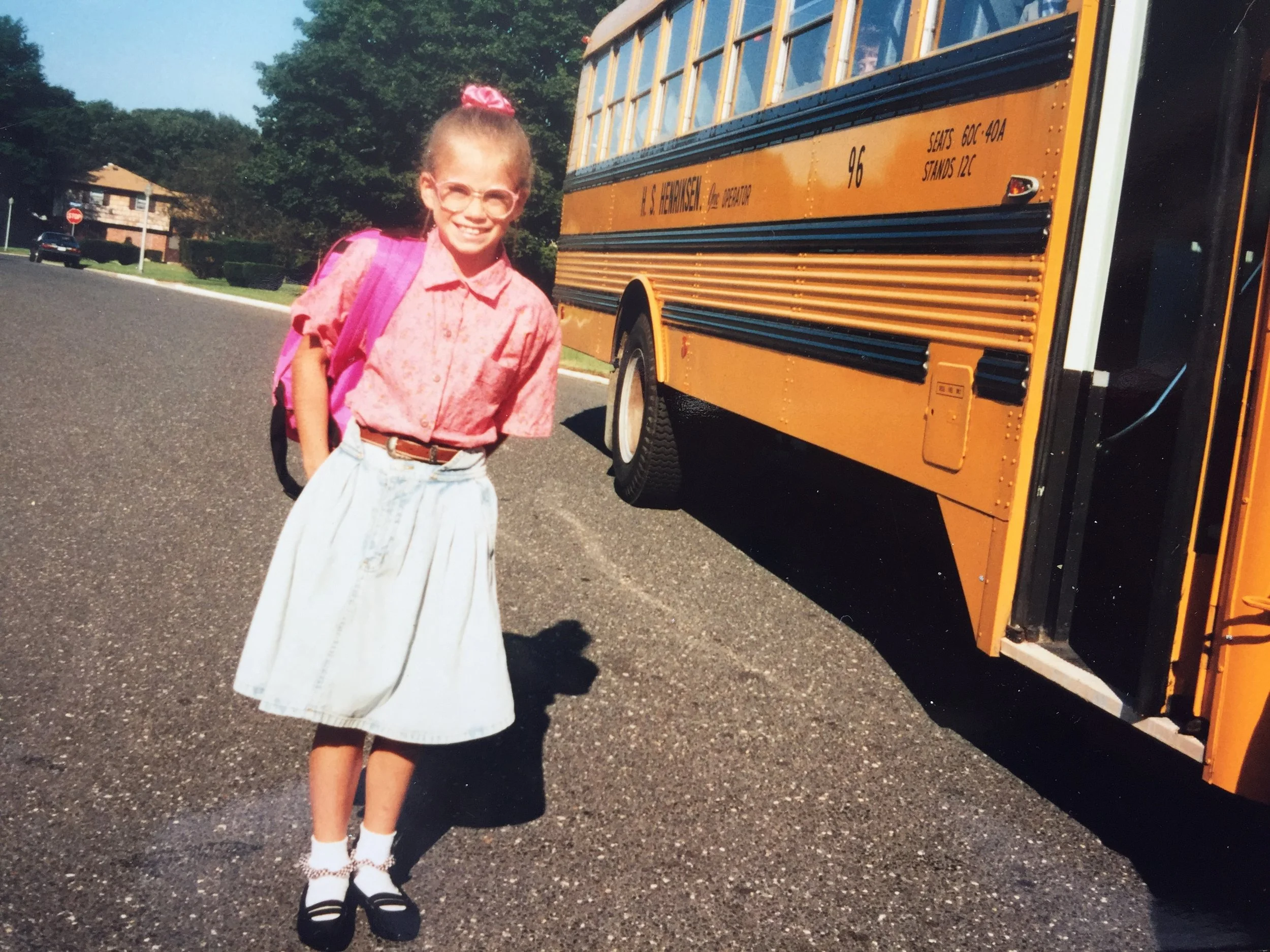
A young Kadhi on her first day of school.
If you are beginning to recognize how old wounds may still be shaping your relationships, choices, and sense of self, this is the kind of work I support clients through in one-on-one sessions.
You can learn more about my approach to emotional healing and inner work , or schedule a free intro call to explore whether this work is the right fit.
Frequently Asked Questions About Childhood Trauma and Stuck Patterns
Can childhood trauma affect adult behavior?
Yes. Childhood trauma can shape adult behavior by influencing how we relate to ourselves, other people, conflict, intimacy, emotions, and safety. Many adult patterns, including people-pleasing, avoidance, hyper-independence, over-functioning, self-blame, compulsive caretaking of others, emotional shutdown, and anxious attachment, began as protective responses to early emotional pain.
What are examples of protective behaviors from childhood trauma?
Protective behaviors may include staying busy, avoiding conflict, shutting down, becoming hyper-independent, rescuing others, people-pleasing, hiding vulnerability, anticipating crisis, or needing others to feel okay. These behaviors often formed for good reasons, but they can become limiting when they continue running our lives in adulthood.
Can I have childhood trauma if I had good parents?
Yes. Having loving parents does not mean every emotional need was met. A person can have a generally good childhood and still have experienced unintentional emotional neglect, lack of attunement, inconsistency, conditional love, unsupported grief, or relational patterns that shaped them in painful ways.
Why do I keep repeating the same patterns?
We often repeat patterns because they are familiar to the nervous system. Even when a pattern is painful, it may feel known, predictable, or tied to old attempts to gain love, safety, approval, or resolution. Healing begins when we become conscious of the pattern and start relating to it with curiosity rather than shame.
How do I heal stuck patterns from childhood?
Healing usually begins with awareness. You start by recognizing the pattern, understanding where it came from, feeling the emotions connected to it, and practicing new ways of responding. Somatic work, inner child healing, parts work, grief work, and supportive coaching can all help bring these old protective strategies into conscious transformation.
Is healing childhood trauma about blaming my parents?
No. Healing childhood trauma is not about blaming your parents. It is about understanding the emotional conditions that shaped you so you can stop repeating old patterns unconsciously. Compassion for your caregivers and honesty about your experience can coexist.
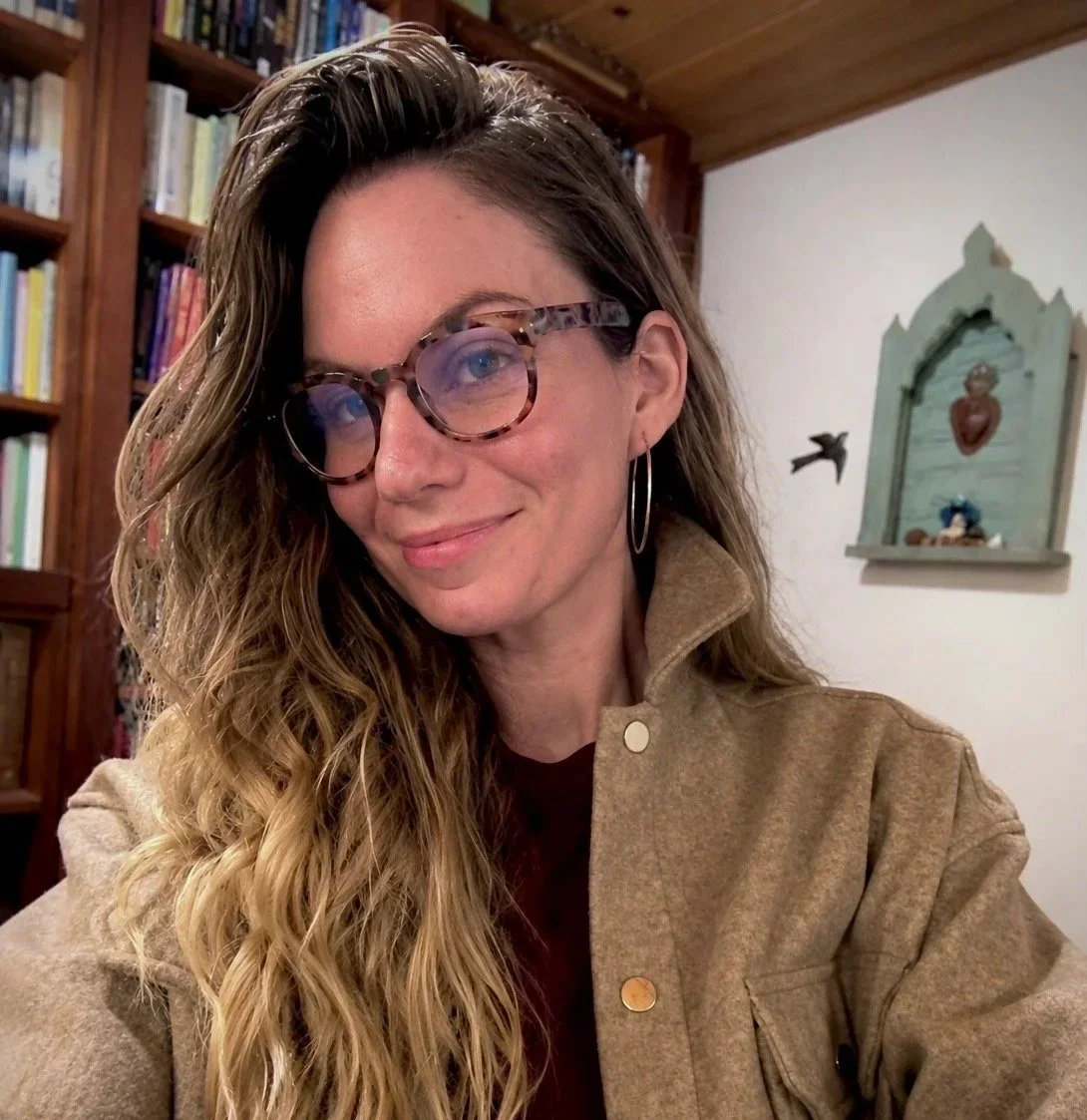
KADHI BO
is a Hakomi-trained somatic coach, spiritual mentor and relationship coach supporting women in emotional healing, self-reclamation, and embodied transformation. She works with women worldwide via Zoom. Learn more about working with Kadhi.